How did a sticker printer small enough for a desk begin?

I love making cute stickers inspired by everyday life. I also love printing photos worth keeping.But between “I want to make a sticker” and “I’m holding one in my hand,” there turned out to be quite a lot in between.
An Idea That Started with One Sticker

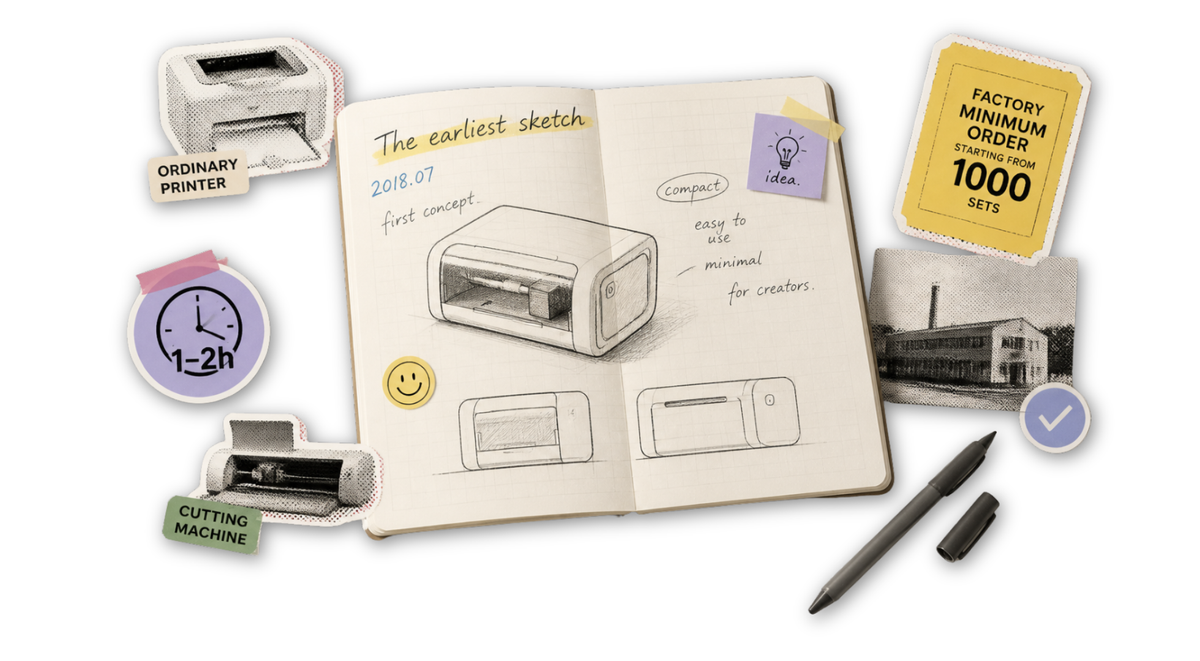
I simply wanted an easy way to make one sticker—to turn everyday moments into stickers and print photos worth keeping. But factories required minimum orders and long waits, while using a regular printer with a cutting machine often took 1–2 hours for a single sticker. So I imagined a tiny creative companion: one that could print with inkjet technology on different materials, cut automatically without tedious calibration, and fit right on a desk. When I couldn’t find one that felt right, we decided to make it ourselves.

Start First, Then Solve Every Challenge

“Can we really build it here?” Looking at a simple office filled with folding tables, computers, paper, takeout coffee, and sketches, our answer was: “Of course. Let’s start first.” That office became the birthplace of the machine. Then inkjet printing brought our first major challenge. We assumed this long-established technology would provide a mature starting point, but real development proved otherwise. Unable to find a usable open-source solution, we started from scratch and built our first prototype with an HP printhead. It could print, but it was still far from becoming a product ready for users.

A red-eye flight—and a visit that didn’t bring back a sample.

We flew to visit a supplier, hoping for a chance to work together. They believed that a young team of only three people, with no track record of success, would have a hard time building a product.To save money, we took red-eye flights both ways. We were so exhausted that we fell asleep at the airport. And we came back without either samples or development documentation.

From Development Documentation to the First Drop of Ink

In January 2026, through a friend’s introduction, we met a new printhead supplier. They had completed printhead development and mass production, and gave us development documentation. Although they did not initially believe that this group of young people could build a printer, the materials gave us a foundation to keep moving forward. We then worked out printhead driving and inkjet control ourselves. By February, the new printhead finally jetted ink successfully—leaving seven or eight messy yet vivid streaks of color on the screen. When the first ink came out, it was chaotic, but we were overjoyed: it really printed.

After the Strawberry Cake Came a Stack of Test Prints

When we moved into our new office, we celebrated with a strawberry cake. The space was a little bigger, new teammates had joined us, and it felt like everything was moving in the right direction. By June, the miniaturized prototype was complete, but the images on the test paper were still far from perfect. The machine had become smaller, while print quality still was not good enough. So we kept studying drivers, algorithms, and inkjet stability, searching for answers through test after test.

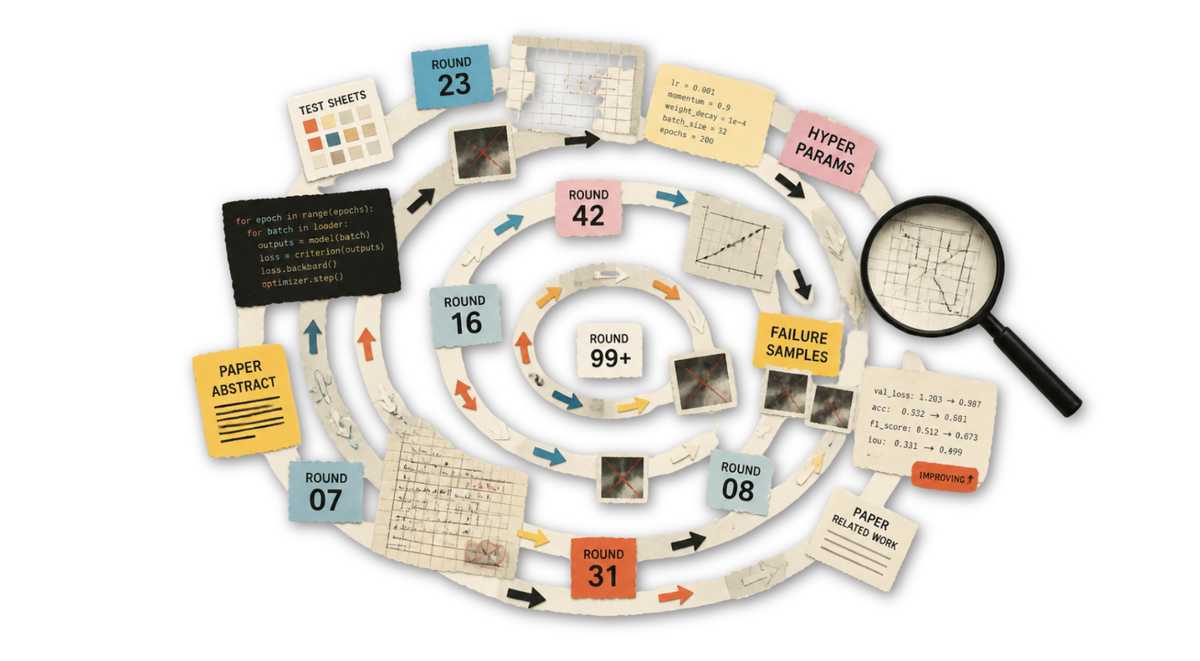
The timeline shows one month. In reality, it was many, many do-overs.

Between these milestones were many iterations that did not each get their own place on the timeline. We kept working to improve print quality.Between these milestones were many iterations that did not each get their own place on the timeline. We kept working to improve print quality.

Follow kamomo on Social Media

Stay up to date with everything happening at kamomo.

Be the first to hear about new product launches, product details, features, and new ways to create with kamomo.

We’ll also share clear updates on production progress, shipping schedules, and delivery news—so you know how your kamomo is making its way to you.

Meet our featured artists, discover their latest work, and explore the stories and sticker designs behind each collaboration.

Instagram

@ kamomo

Tiktok

@ kamomo

Facebook

@ kamomo